


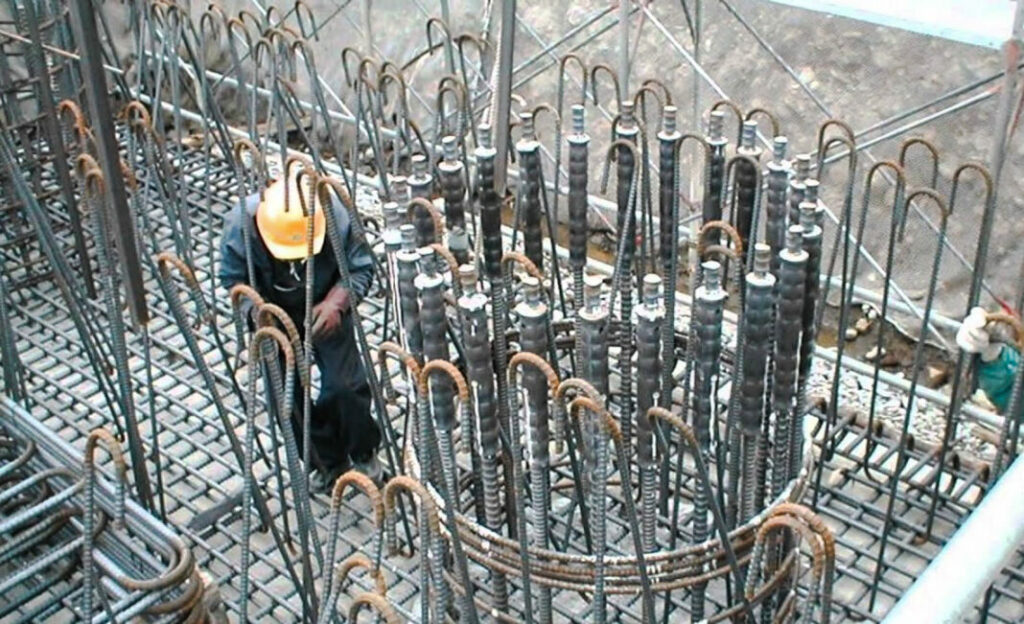
Rebar splicing is the technique of joining two or more pieces of reinforcing steel to create a continuous length. This process is essential in construction as it allows for the creation of complex reinforcement systems that extend beyond the standard lengths of manufactured rebar. Proper splicing ensures that the joined bars effectively transfer loads and maintain the structural integrity of the concrete element.
As buildings reach new heights and infrastructure projects become more ambitious, high-strength rebar splicing becomes increasingly crucial. These methods must not only match but often exceed the strength of the base rebar material. High-strength splicing techniques are essential in:
- Skyscrapers and high-rise buildings
- Bridges and long-span structures
- Nuclear power plants and critical infrastructure
- Earthquake-resistant structures
- Heavy industrial facilities
Here are the best rebar splicing methods for high-strength applications,
Mechanical coupler splicing
Mechanical coupler splicing involves using specially designed metal sleeves or couplers to join rebar sections. This method is reliable and efficient, making it popular in high-strength applications.
- Achieve 100% or greater of the rebar’s specified minimum tensile strength
- Reduces congestion in heavily reinforced areas
- Allows for quick installation and inspection
- Suitable for both tension and compression splices
Considerations
- Requires precise bar-end preparation
- Higher initial costs
- Needs careful selection of coupler type based on project requirements
Threaded rebar splicing
Threaded rebar splicing involves cutting threads onto the ends of the rebar and joining them with internally threaded couplers. This method is favoured in precast concrete applications and areas requiring future disassembly.
- Provides a secure, high-strength connection
- Allows for easy disassembly if needed
- Reduces rebar congestion
- Offers good axial alignment of bars
Considerations
- Requires specialized equipment for thread-cutting
- May reduce the cross-sectional area of the rebar at the threaded portion
- Needs protection of threads during handling and placement
Headed rebar splicing
Headed rebar splicing involves attaching specialized heads to the ends of the rebar, which are then connected using a coupler or overlapped. This method is particularly effective in reducing congestion in critical areas.
- Significantly reduces development length required for the splice
- Minimizes congestion in joint regions
- Provides excellent anchorage in confined spaces
- Can be combined with other splicing methods for optimal performance
Considerations
- Requires careful detailing to ensure proper load transfer
- May have higher material costs
- Needs specialized equipment for head attachment
Grout-filled sleeve splicing
This method connects rebar sections using a steel sleeve filled with high-strength grout. It’s beneficial in precast concrete connections and areas with limited access.
- Achieve full-strength development
- Suitable for both vertical and horizontal applications
- Provides some tolerance for misalignment
- Offers good corrosion protection
Considerations
- Requires careful grouting procedures to ensure full strength
- May have longer curing times compared to mechanical methods
- Needs quality control measures to ensure proper grout filling
Welded splicing
While less common in modern high-strength applications due to concerns about altering rebar properties, welded splicing remains a viable option in specific scenarios.
- Can provide full-strength connection when properly executed
- Useful in complex geometries or unique structural configurations
- Allows for field adjustments
Considerations
- Requires highly skilled welders and careful quality control
- May alter the mechanical properties of the rebar
- Not suitable for all types of rebar (e.g., epoxy-coated)
- Be time-consuming and weather-dependent
As technology and materials science advance, we expect further innovations in rebar splicing methods. These developments will undoubtedly contribute to the evolution of construction practices, allowing for even more outstanding achievements in structural engineering and architecture. Keeping up with the latest Bartec splicing methods and applications is vital for construction professionals to deliver strong, high-quality structures.