


Most Tampa homeowners think about their roof exactly twice: when they move in, and when something leaks. That gap in between is where the real money gets lost.
Florida’s subtropical climate is relentless on roofing materials. UV radiation bakes asphalt shingles from May through October, afternoon thunderstorms drive water sideways into flashing seams, and the humidity that never quite leaves accelerates wood rot in decking you can’t see from the ground. By the time a problem shows up on your ceiling, it’s usually been building for six to eighteen months. An annual inspection catches it when repairs cost a few hundred dollars instead of a few thousand.
This isn’t a scare tactic. It’s physics, weather history, and a straightforward cost argument. Here’s what the data actually shows.
The “Hurricane Bubble” Myth That’s Getting Tampa Homeowners in Trouble
A persistent local belief holds that Tampa Bay is protected from major hurricane strikes by its geography. The history is partially accurate but badly misread.
According to NOAA’s Atlantic Oceanographic and Meteorological Laboratory, the last recorded hurricane strike in the Tampa Bay area occurred on October 8, 1946. That’s a long stretch without a direct hit. But there is no scientific basis for a protective bubble, and the reality is simply a matter of luck and geographical factors that caused storms to weaken or change course, which does not guarantee that future hurricanes will continue to bypass the city.
The practical problem: that “we haven’t been hit recently” logic leads homeowners to defer maintenance. Roofs age regardless of whether a hurricane lands. Shingle adhesive strips degrade from UV exposure every summer. Flashing pulls away from chimney stacks and skylights through normal thermal expansion cycles. And if a storm does make a direct run at Tampa Bay, an insurance adjuster will absolutely notice whether your roof was maintained or neglected before the wind arrived.
The roof that fails inspection after a storm is the one the insurer calls “pre-existing wear.” That distinction costs homeowners thousands in denied claims.
The Three-Window Framework for Tampa Roof Timing
Most roofing guides tell you to inspect in spring and after a storm. That’s reasonable advice for Ohio. In Tampa, you’re dealing with three distinct stress windows that each create different failure modes, and collapsing them into two checkpoints leaves gaps.
Window One: Pre-Season (April to May). Before the Atlantic hurricane season officially opens June 1st, you want eyes on the roof while repair crews are still available and not overwhelmed. This window catches winter condensation damage and any loosening from the previous season’s storms.
Window Two: Post-Peak (October to November). The statistical peak of Atlantic hurricane season runs August through October. Once that period passes, inspect for granule loss, lifted tab edges, and compromised valley flashing. Minor repairs done here prevent moisture intrusion through the winter months.
Window Three: The Year-15 Cliff. This one isn’t seasonal, it’s age-based. Around the fifteen-year mark, asphalt shingle roofs enter a phase where adhesive tab seals fail at a much faster rate. A professional inspection at that milestone, regardless of which calendar month it falls, tells you whether you’re looking at a few more years or an imminent replacement decision.
You don’t have to hit all three windows every year. But knowing which window applies to your roof’s current age and condition is the difference between proactive maintenance and an emergency call in August.
What a Professional Inspection Actually Covers
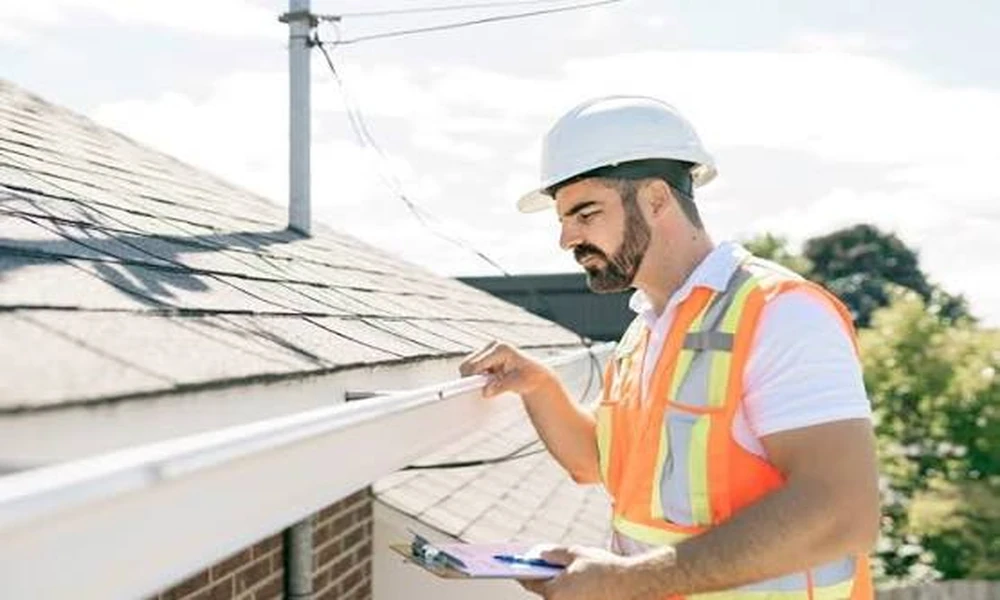
A DIY look from the ground catches the obvious stuff: missing shingles, visible moss, gutters pulling away from the fascia. A professional inspection goes three layers deeper, and two of those layers are invisible from ground level.
A trained inspector checks the field of the roof (the flat, open sections), but also concentrates on the transition points: ridge caps, valleys, pipe boots, skylight flashing, and any point where two different materials meet. Those intersections fail first, and they’re also the points where a quick caulk job can mask a deeper problem for just long enough to let water into the decking underneath.
Deck condition matters more than most homeowners realize. Soft spots in the decking indicate moisture infiltration that’s already reached the structural layer. That’s a different repair category than surface shingle replacement, and catching it early changes the cost significantly.
If your property is in Hillsborough, Pinellas, or Pasco County, scheduling a roof inspection in Tampa, Florida residents can access year-round means you’re not waiting until after a storm to find out what your roof’s actual condition is.
By getting a roof inspection, residents can access year-round means you’re not waiting until after a storm to find out what your roof’s actual condition is.
The Financial Case Is Straightforward
The math on preventive maintenance versus reactive repair isn’t complicated, but most homeowners never sit down with it until they’re staring at a contractor estimate they weren’t expecting.
Consider a concrete scenario. A homeowner on a 12-year-old shingle roof skips inspections for three years. A flashing separation near the chimney base goes undetected. Water works its way into the decking during the 2024 storm season. By the time a stain appears on the bedroom ceiling, the inspector finds rotted decking across a 6-by-8-foot section plus mold remediation now on the table. That repair runs three to four times what catching the flashing gap in year one would have cost.
The principle scales up to catastrophic events. According to the National Institute of Building Sciences, a study commissioned by FEMA found that for every public dollar spent on mitigation, society saves $4. The same logic applies at the homeowner level: spending on documented, professional inspections creates a paper trail that demonstrates maintenance, which matters both for insurance claims and for the resale disclosure process.
Annual inspections also give you leverage. A documented inspection report showing your roof was in good condition 60 days before a storm is a very different claims conversation than one where you’re explaining why you can’t remember the last time a professional looked at it.
Tampa’s Storm Risk in Numbers
| Risk Factor | Detail | Source |
|---|---|---|
| Tropical cyclone share of U.S. losses, 1980-2024 | Approximately 53% of total economic losses | Journal of the National Academy of Forensic Engineers, 2026 |
| Last direct hurricane strike on Tampa Bay | October 8, 1946 | NOAA Atlantic Oceanographic and Meteorological Laboratory |
| Hazard mitigation return on spending | $4 saved per $1 spent | National Institute of Building Sciences, FEMA-commissioned study |
What to Do After the Inspection Report Arrives
An inspection report without an action plan is just a document in a drawer. Here’s how to actually use it:
- Sort findings into three buckets: immediate repairs (anything flagged as active moisture intrusion), monitor items (early-stage wear that warrants a six-month recheck), and baseline documentation (no action needed, file it with your home records).
- Get repair estimates before hurricane season opens in June, not after. Contractor availability tightens fast once the first named storm threatens the Gulf.
- Upload a copy of the report to your cloud storage with your insurance policy documents. If you ever need to file a wind claim, you’ll want that timeline accessible immediately.
- Note the inspector’s projected remaining roof life. That number should factor into your decision if you’re refinancing, selling, or reassessing your homeowner’s policy coverage level.
“The difference between a paid claim and a denied one often comes down to documentation, timing, and how the inspection is handled.”
That’s not just advice from a contractor. It’s the reality of how Florida’s insurance market works in 2026, where claim denial rates have climbed sharply and carriers are using aerial imagery and AI tools to build a pre-claim baseline on your property whether you know it or not.
The One Habit That Changes Your Roof’s Trajectory
Annual inspections aren’t glamorous. They don’t come with before-and-after photos or a dramatic reveal. What they do is compress the window between “minor issue” and “expensive failure,” and in Tampa’s climate, that window closes faster than in most of the country.
If your roof is more than five years old and you haven’t had a professional inspection in the past twelve months, that’s the place to start. Not a storm, not a leak, not a ceiling stain. Schedule it now, file the report, and let the paper trail work in your favor when you need it most.