


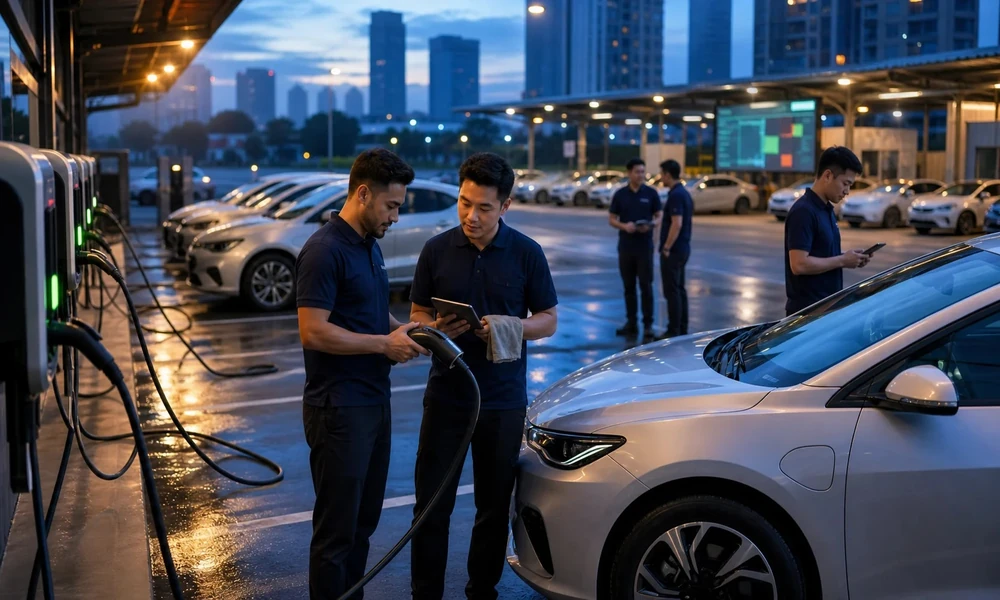
Not every commercial fleet should electrify at the same pace. Long-distance trucking, rural service routes, and mixed-use vehicles can be difficult to plan around charging. Last-mile delivery is different. It often has fixed routes, repeated stops, known daily mileage, and a depot where vehicles return after work. That makes it one of the cleaner entry points for electric commercial vehicles.
Routes Are Predictable
The business case starts with route discipline. A delivery van that works within a defined urban area is easier to match to battery range, charging window, and cargo load. The operator can study current fuel spend, daily distance, parking time, and vehicle downtime before choosing an electric replacement.
This is very different from asking a retail customer to change habits. A fleet manager can control schedules, driver training, charging location, and maintenance process. If the daily route is well understood, the EV discussion becomes operational rather than emotional.
Route predictability also helps with vehicle choice. A light parcel route, grocery route, and spare-parts delivery route may need different cargo volume, payload, door layout, and range margin. The dealer should ask about the work before recommending a van. A vehicle that fits one delivery pattern may be inefficient for another.
Depot Charging Changes the Equation
Depot charging is the major advantage. If vans return to the same base every evening, the fleet can charge during off-hours and begin the next morning with a predictable battery level. That reduces dependence on public chargers and makes energy cost easier to model.
For broader commercial-vehicle sourcing context, Starvia’s Chinese EV market guides include related reading on fleet economics, charging, and dealer preparation.
The depot still needs planning. Importers and fleet buyers should check electrical capacity, charger placement, parking layout, fire and safety rules, cable management, and what happens if several vehicles need charging at the same time. A good EV van plan includes the yard, not only the van.
The charging window should be matched to operations. Some fleets park overnight for many hours. Others run two shifts and have only short breaks. A slow depot charger may be enough for the first case and too limiting for the second. This detail should be settled before a purchase order is placed.
Cargo and Uptime Still Matter
Electric vans should not be sold only as green vehicles. Fleet buyers care about payload, cargo volume, door durability, tires, brakes, suspension, mirrors, charging-port reliability, and parts supply. A small part can remove a van from service even when the battery and motor are fine.
Dealers should also prepare a driver guide. Drivers need to know how loading affects range, when to charge, how to report warnings, and how to treat the vehicle during hot or dusty conditions. Training is not a luxury; it protects uptime.
Maintenance planning should include common wear items. Delivery vans stop often, open doors constantly, and may operate on rough urban roads. Tires, hinges, mirrors, cabin trim, brakes, and suspension parts can decide whether the EV program feels dependable in daily work.
Last-mile delivery works well as a first electrification step because it is measurable. The fleet can compare current fuel use, route length, downtime, and service cost against an electric plan under current local conditions. For more detail on electric vans for last-mile delivery, Starvia’s related article explains how dealers and fleet buyers should frame the commercial case.