
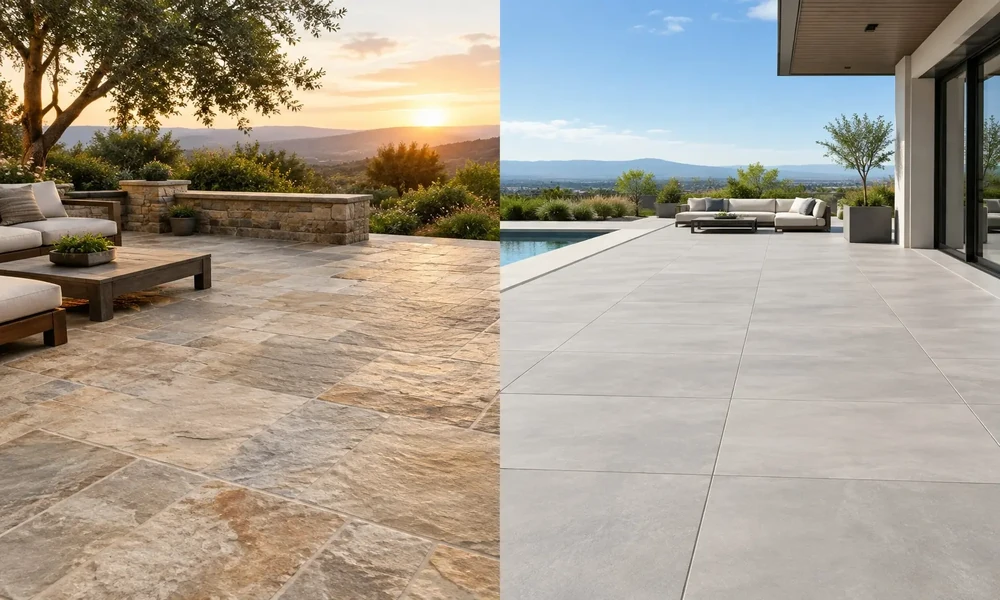
Two summers on the wrong paver will teach you a lesson no showroom ever can. You walk outside at 1 p.m. in bare feet, throw yourself toward the pool, and the pavers bite. Porcelain and natural stone both look gorgeous in photos. Only one of them behaves well under Miami’s specific kind of heat.
I’ve watched plenty of pool decks go in on my block, and the pattern is predictable. The homeowner who bought on looks alone calls the installer back within a year. The one who planned around heat, storms, and upkeep ends up with a surface that ages with a little dignity. This guide walks you through that planning, section by section, so you spend once instead of twice. If you want the widest selection of material in one place, start with a Miami natural stone supplier and ask to see heat-tested samples before anything else.
Get the basics right and everything downstream gets easier. Get them wrong and no amount of sealing fixes it.
Why Miami Beats Up Pavers More Than Almost Anywhere Else
South Florida gives your deck three enemies at once: brutal UV, salt-laden air, and rainfall that arrives sideways. The sun breaks down resins and fades weak pigments. Salt eats at anything reactive. Water gets under edging and lifts it. None of that is a dealbreaker for a good material, but it separates the good from the pretty.
The labor market matters too. According to the Department of Labor, contractors are required to hire legally and pay according to employment law, which tells you something simple: a licensed crew costs real money, and prices that seem suspiciously low usually mean the shortcuts live in the prep work. Settle a paver on a bad base and it will move. Every time.
My bias, stated up front: in this climate I’d pay for the base before I paid for the finish. Nobody photographs the base. Everybody notices it when a slab rocks.
Natural Stone vs. Porcelain: A Straight Comparison
Here’s where most arguments start, so let’s put the two side by side instead of talking in circles.
| Factor | Natural stone | Porcelain pavers |
|---|---|---|
| Heat underfoot | Stays noticeably cooler on bare feet | Can run hot in direct afternoon sun |
| Color stability | Color is throughout the slab | Color sits on or near the surface |
| Repairs | Chips can be filled or sanded | Damaged pieces get replaced entirely |
| Weight | Heavy, sometimes needs structural checks | Lighter and easier to handle on roofs |
| Feel over time | Soft patina, ages into a lived-in look | Holds a uniform finish or shows wear |
Read that table honestly and you’ll notice there’s no universal winner. There’s a winner for your yard.
The Heat Question Nobody Loses Sleep Over Until July
Surface temperature is the argument I hear the least and should hear the most. Light-colored natural stone reflects a good chunk of the sun’s energy instead of holding it. Porcelain’s dense, glassy surface absorbs and can get uncomfortable, especially in darker colors and especially around pools where people are barefoot and wet.
If your pavers surround a pool, hot feet change how you use the space. Kids sprint. Guests shuffle. Nobody lingers. Test before you commit: place a sample of each material outside on concrete at noon, then put your palm on both hours later. That single experiment settles more arguments than any brochure.
Storm Season and the Sourcing Question
Hurricane season in Florida officially opens in June, and the Atlantic’s peak activity lands in late summer. The National Weather Service tracks every system, and if you’ve ever scrambled to strap down furniture before a track shifted, you know the drill. Your pavers won’t blow away, but bad drainage will flood them, and scorched earth under a heavy rain reveals every low spot.
That’s why I make sourcing a storm issue, not just an aesthetics issue. Ask where the stone came from and how it was handled before it reached your yard. Local suppliers who keep inventory in Florida warehouses can replace a broken piece fast, which matters right after a blow when everyone needs the same crew and the same material.
Cost, Honestly
Up front, porcelain usually looks cheaper per square foot. Add installation over a proper base, plus edge restraints and drainage correction, and the gap narrows. Over a decade, natural stone often wins because repairs are cheaper and the surface doesn’t need replacing when the color fades. Porcelain wins on roofs and balconies where weight is a factor. Choose on total life cost, not the tag on the pallet.
A Practical Checklist Before You Buy
- Test a sample in direct sun at midday, then check it again at 4 p.m.
- Ask for a written base spec, including compaction and slope toward drainage.
- Confirm the material’s origin and whether local replacement stock exists.
- Check installer licensing and insurance through the proper Florida channel.
- Compare three quotes on identical scope, not on headline price.
Work that list in order and you’ll avoid most of what goes wrong on a Miami deck.
What I’d Do If It Were My Yard
Around a pool in South Florida, I’d choose a light natural stone with a textured finish, set over a base specified to shed water. I’d accept the higher labor cost without a flinch. If I were tiling a screened balcony, I’d pick porcelain and stress-test the weight assumptions first. The mistake is applying one answer to every surface on the property.
The Bottom Line on Choosing Pavers
The right paver in Miami is the one that stays cool, drains hard, and can be repaired without tearing out a whole section. You now know how to test heat, read a base spec, check sourcing, and compare real cost. Next step: grab samples, leave them out in the sun for a day, and feel the difference yourself before you sign anything. Which surface ends up under your feet this summer?